

Which Flour Is Good for Diabetes?



Each article on the fitterfly website is a labor of love, reviewed by a team of certified medical experts specializing in various fields like Diabetology, Nutrition, Physiotherapy, Psychology.
They carefully examine all references and facts to provide up-to-date and reliable information, aiming to break myths and empower you in your health journey.
Meet Our Reviewing Team


Shilpa Joshi
Shilpa Joshi is one of India’s leading dietitian and diabetes educator. At her clinic, she uses principles of Medical Nutrition Therapy (MNT) for preventive and therapeutic care of various health issues.
Read more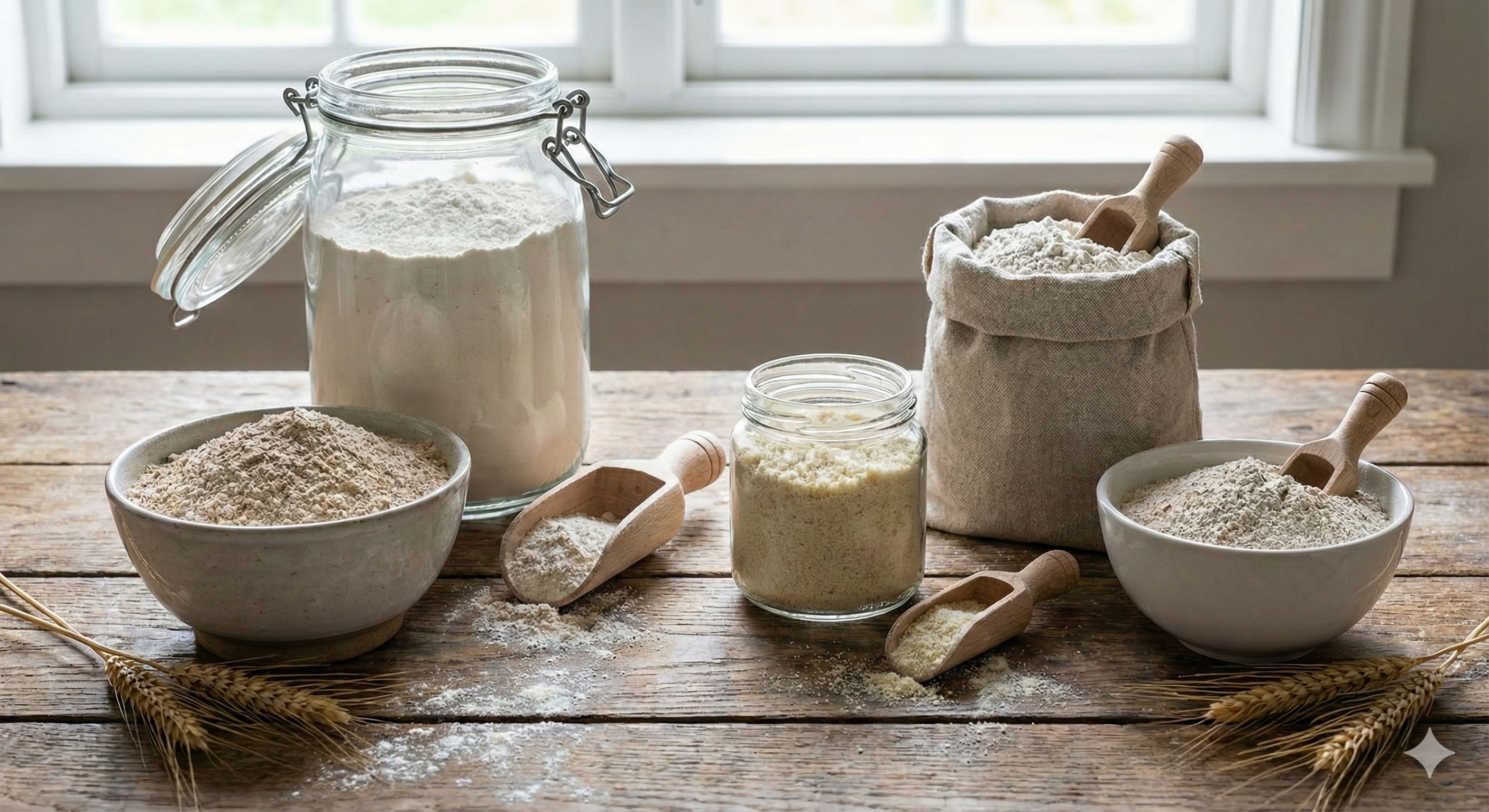
When someone in the family is diagnosed with diabetes, the first question that pops up in every Indian kitchen is “Diabetes mein ab kaun sa atta accha hota hai?” Or simply, “Which flour is good for diabetes?”
With so many options like wheat, jowar, ragi, bajra, and chana, it is easy to feel confused. The good news is that our traditional desi flours and millets are naturally nutritious and perfect for daily use.
Choosing the right flour does not mean giving up soft rotis or tasty parathas; it simply means picking smarter, diabetes-friendly options. If you are still unsure which flour is right for you, don’t worry! Fitterfly is here to help.
Our expert nutritionists guide you on which flour suits your body better, how to combine flours for better sugar control, and what to use for your everyday meals. With one-to-one personalised support, you get simple, clear guidance with no confusion and no guesswork.


Best Flours for Diabetes: Complete GI Chart of Cereals, Millets, and Pulses.
- GI (Glycemic Index) tells how fast a food raises blood sugar. GL (Glycemic Load) depends on both the GI and the quantity eaten.
- Even if a flour is low GI, eating a large portion can still increase its glycemic load (GL).
- A high GL means more glucose enters the bloodstream, which can raise postprandial (PP) blood sugar levels.
- Low GI does not mean you can eat unlimited amounts; portion size matters, too.
- That is why moderation and portion control are key to managing diabetes, regardless of the flour you choose.
Cereals:
| Flour | GI level |
| Wheat atta | Medium |
| Maida(refined flour) | High |
| Rice flour | High |
| Corn flour | Medium-high |
| Barley flour | Low |
| Oats flour | Low |
Major millets:
| Flour | GI Level |
| Jowar(Sorghum) | Low-medium |
| Bajra(Pearl millet) | Low |
| Ragi(Finger millet) | Medium |
Minor millets:
| Flour | GI Level |
| Kodo millet | Low |
| Little millet | Low |
| Foxtail millet | Low |
| Barnyard millet | Low |
Pseudograins:
| Flours | GI Level |
| Buckwheat flour(kuttu) | Low |
| Quinoa flour | Low |
| Amaranth flour | Medium |
Pulse-based flours:
| Flour | GI Level |
| Besan(gram flour) | Low |
| Moon dal flour | Low |
| Urad dal flour | Low-medium |
| Soy flour | Low |
Nut flours:
| Flour | GI Level |
| Almond flour | Very low |
| Coconut flour | Low |
| Hazelnut flour | Low |
How Flours Affect Blood Sugar in a Person with Diabetes?
Flours affect people with diabetes depending on how rapidly they break down into glucose after digestion.
Refined flours, such as maida and white rice flour, break down quickly and cause sudden sugar spikes, whereas whole-grain and high-fibre flours, like besan, barley, jowar, oats, and buckwheat, digest slowly and help keep blood sugar stable.
However, even healthy flours can affect each person differently, depending on factors such as gut health, portion size, cooking method, and the foods they are paired with. Mixing flours and choosing protein- and fibre-rich options can further reduce spikes.
Tip: Monitoring your post-prandial (PP) blood sugar after eating will help you understand the quantity that works best for you. |
How to Choose and Combine Flours for a Person with Diabetes?
Combining Flours for Best Results:
Combining flours such as wheat with besan, jowar with ragi, or oats with almond flour helps improve texture, flavour, and glycemic balance.
Combining high-fibre, protein-rich, and low-GI flours helps control blood sugar levels while keeping meals tasty.
Portion and Cooking Method:
Even healthy flours can spike sugar if consumed in large quantities.
Cooking methods such as steaming, baking, or light roasting retain nutrients better than deep frying.
Rotate Flours:
Using a variety of flours ensures balanced nutrition, vitamins, minerals, and proteins, and helps avoid meal monotony.
Personalised Choice:
Each person’s blood sugar response may differ. Monitoring sugar levels after trying a new flour is recommended.
Conclusion:
Choosing the right flour for diabetes is not just about low Glycemic index(GI), but also about portion size and combination.
GI tells how fast a food raises blood sugar, while Glycemic Load(GI) depends on how much you eat, so even low-GI flours can raise post-meal sugar levels if eaten in excess.
Refined flours such as maida and rice flour can cause blood sugar spikes; for this reason, it is best to avoid these flours.
Whole grains, millets, pulses, and nut flours digest slowly, provide fibre and also protein, and are generally better choices. However, moderation is essential for all flours.
Mixing flours, choosing high-fibre, protein-rich options, using healthy cooking methods, and rotating flours can help maintain stable blood sugar levels.
Since each person’s response can vary, checking post-prandial (PP) blood sugar after meals is the best way to understand what quantity and combination works for you.
Fittertake:
Choosing the right flour and managing portions can be confusing with so many options available. Fitterfly helps by providing personalised guidance.
Our expert nutritionists show you which flours suit your body, suggest bright combinations, and create meal plans that balance taste with blood sugar control.
With one-on-one support, you can enjoy your favourite rotis, parathas, and baked foods while keeping your glucose levels stable and healthy.
You can also explore our Diabetes Prime program, designed to support blood sugar level management and overall wellness.
Call us on 08068507599 to know more.
This blog provides general information for educational and informational purposes only and shouldn't be seen as professional advice.
Frequently Asked Questions
What is the best flour for a person with diabetes?
Flours that are low-GI, high in fibre, and protein-rich are best. Examples include barley, besan (gram flour), oats, and almond flour. These flours digest slowly and help maintain stable blood sugar in limited quantities. Always check your postprandial blood sugar to understand your blood sugar levels.
Which flour roti is good for diabetes?
Roti made from low-GI flours such as jowar, bajra, or barley, or a mix of wheat and besan, is ideal. Combining flours can improve taste, texture, and blood sugar control.
Which flour is lowest in sugar?
Flours naturally low in carbohydrates or high in fibre have the lowest sugar impact. These include almond flour, coconut flour, besan, barley, and ragi flour.
Which flour is not good for diabetes?
? Refined flours like maida (refined wheat flour) and white rice flour digest quickly, causing rapid rises in blood sugar levels, and should be avoided or consumed in minimal quantities.