

Which Bread Is Good for Diabetes?



Each article on the fitterfly website is a labor of love, reviewed by a team of certified medical experts specializing in various fields like Diabetology, Nutrition, Physiotherapy, Psychology.
They carefully examine all references and facts to provide up-to-date and reliable information, aiming to break myths and empower you in your health journey.
Meet Our Reviewing Team


Shilpa Joshi
Shilpa Joshi is one of India’s leading dietitian and diabetes educator. At her clinic, she uses principles of Medical Nutrition Therapy (MNT) for preventive and therapeutic care of various health issues.
Read more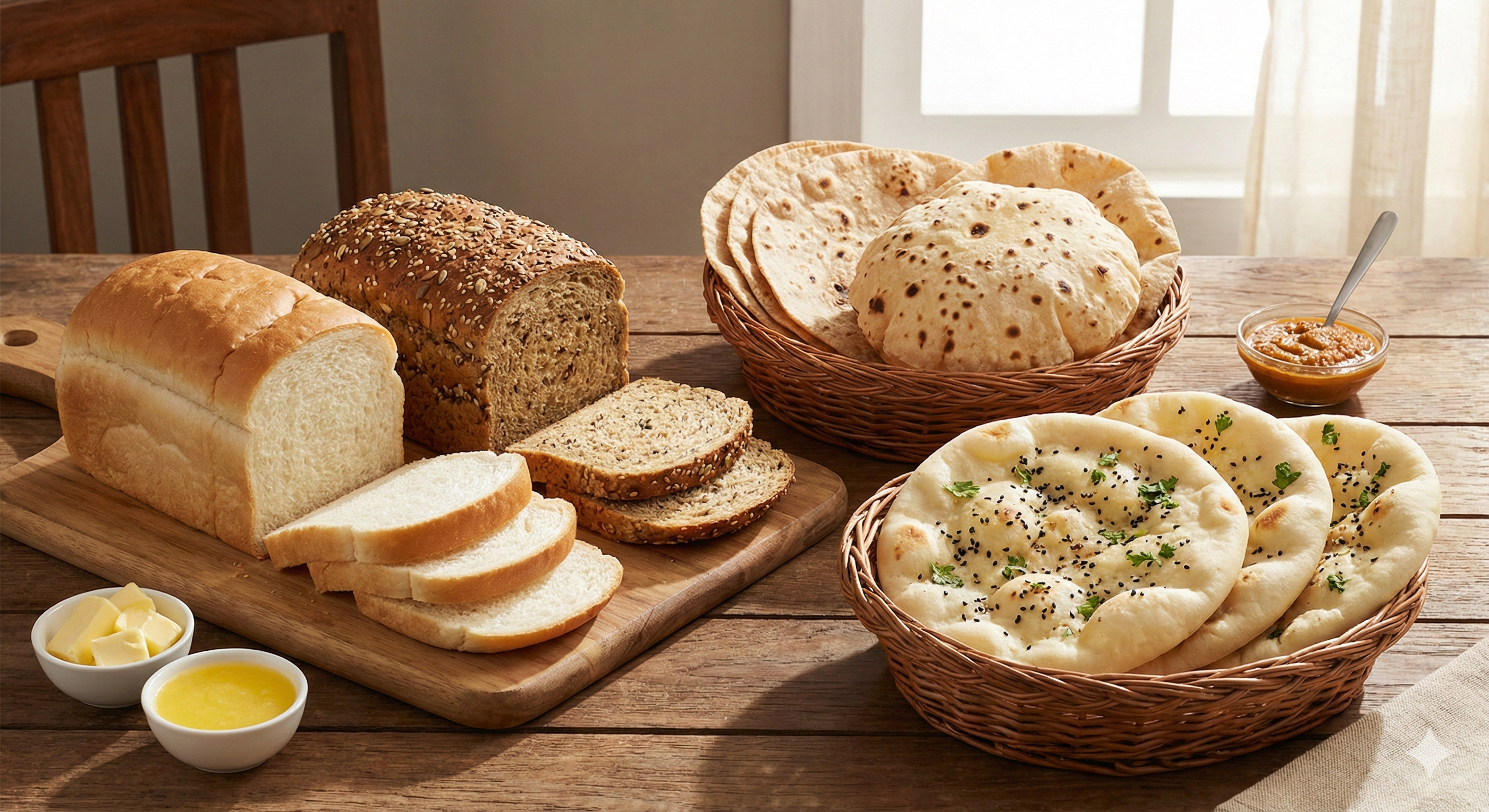
Bread is something almost every Indian home loves, from morning toast with chai or simple bread and jam to pav bhaji at dinner to the classic bread upma. But for someone managing diabetes, there is always that one big doubt: “Which bread is good for diabetes?” “Yeh bread diabetes ke liye theek hai kya?” Should I choose brown bread? Multigrain? Whole wheat? Or avoid bread altogether?”
Let us break it down simply and clearly so you can understand and make the right choice for your blood sugar levels and overall health.
Indian breads are a wide variety of flatbreads traditionally eaten with vegetables, dals, and curries. Most are made from wheat flour or other grains and are typically prepared fresh and served hot.
Typical Indian breads include chapati (roti), phulka, paratha, naan, kulcha, bhatura, and poori. India also has many regional breads, such as makki ki roti (maize flour), bajra roti, jowar roti, ragi roti, appam, and dosa, which are made from different grains and cereals.
On the other hand, the bread we buy from kirana stores or supermarkets is ready-made and packed. Most commonly available breads are white bread, brown bread, whole wheat bread, atta bread, milk bread, and multigrain bread.
Packed breads are preserved to extend shelf life and are convenient to purchase and use. Although both are called bread, Indian fresh breads and store-bought breads differ greatly in how they are prepared, stored, and eaten.
But just because store-bought breads are readily available doesn’t mean they are the best choice for your health, especially if you are managing diabetes.
The Truth About Store-Bought Breads & Diabetes:
Most breads we find in the market, even the ones that look “healthy,” usually contain:
- Refined flour (maida)
- Added sugar
- Vegetable oils
- Preservatives
- Caramel colour
- Emulsifiers and dough conditioners
These ingredients are rapidly absorbed and cause rapid blood glucose spikes, making them unsuitable for regular consumption in individuals with diabetes.
Therefore, selecting the appropriate type of bread is not just about taste; it is also about managing blood glucose levels effectively.
Here Is What Really Matters:
The type of flour used
How processed is the bread?
How quickly does it raise your blood sugar (glycemic index)?
How much fibre does it contain?
What Is the Nutritional Value of Different Types of Store-Bought Breads?
Here are approximate nutritional values of common breads per 100 g (typical of standard store-bought brands you find in supermarkets and bakeries). Values can vary slightly by brand and recipe:
| Nutrient | Brown Bread | White Bread | Whole Wheat or Atta Bread | Milk Bread | Roti |
|---|---|---|---|---|---|
| Energy(Kcal) | 260 – 300 | 250 – 260 | 250 – 260 | 260 – 320 | 175 – 250 |
| Protein(g) | 8 – 10 | 7 – 8 | 8 – 9 | 8 – 10 | 5 – 7 |
| Carbohydrate(g) | 53 – 57 | 54 – 55 | 52 – 53 | 52 – 57 | 37 – 50 |
| Total Sugar(g) | 4 – 6 | 2 – 3 | 2 – 3 | 1- 20 | 0 |
| Total Fat(g) | 3 – 4 | 1 – 2 | 3 – 4 | 1 – 6 | 1 – 2 (recipe dependent) |
| Total Fibre | 2 – 3 | 1 – 2 | 4 – 4.4 | 1- 2 | 2 – 3 |
Although many bread packets carry nutrition labels, most do not clearly mention fibre content. As a result, consumers often assume that all breads provide adequate fibre, when in reality many packaged breads provide very little fibre, which may be insufficient for satiety and effective blood sugar regulation.
Store-Bought Breads for Diabetes: What Works, What Doesn’t
Whole Wheat Bread/Atta Bread:
Whole wheat bread is generally a mix of whole wheat flour and refined flour(maida).
However, be cautious because many brands use “wheat flour” on the front of the packet, but still use maida as the main ingredient. Upon consumption, blood glucose levels may rise rapidly.
| Point to be noted: 100% whole wheat bread is available in the market, and can also be made on order by a baker who offers customisation. |
Multigrain Bread:
Multigrain bread is often regarded as a healthy option because it contains multiple grains, such as wheat, oats, ragi, barley, or corn. However, not all multigrain breads are equally healthy.
In many packaged products, refined flour (maida) remains the primary ingredient, with additional grains added in small amounts, primarily for appearance or marketing.
This means that, although the bread is labelled “multigrain,” it may not provide the fibre and nutritional benefits people expect.
White Bread:
White bread is one of the least diabetes-friendly options because it is:
Made entirely from maida (refined flour), very low in fibre, High on the glycemic index, known to cause rapid blood glucose spikes.
Brown Bread:
Surprisingly, but true, most brown bread in India is not whole wheat. It often contains: maida mixed with caramel colour, added sugar and preservatives.
The brown colour does not mean whole wheat. This makes it unsuitable for diabetes control.
Milk Bread / Butter Bread:
Soft, sweet, and tasty, but not ideal for diabetes due to higher sugar content, more calories and quick glucose spikes.
These are not diabetes-friendly and should be avoided when possible.
How to Pick the Right Bread for Diabetes?
Before you add bread to your cart, check these:
Read the label carefully:
Always check that whole wheat or whole grains are listed as the first ingredient. Avoid breads made with refined flour. Also, check the fibre content on the nutrition label.
Choose fibre-rich breads, as fibre helps slow sugar absorption and keeps you full for longer.
Watch out for the ingredient list:
Avoid breads that list refined flour (maida), enriched flour, sugar, glucose syrup, or corn syrup among the first few ingredients. Also, check for additives, artificial colours, and preservatives, which can affect our health.
Ideally, the label should mention 100% whole wheat or whole grains as the main ingredient, and show higher fibre content. If percentages are given, make sure whole grains make up the majority of the bread.
| Note: It is not only about eating less bread; it is about choosing the appropriate one. |
What are the Best Ways to Make Bread Diabetes-Friendly?
- Portion size matters. Even healthy breads can affect blood sugar if eaten in large amounts. For most people with diabetes, 1 slice at a time is safer.
- Try pairing bread with masala omelette, paneer bhurji, chickpea salad, and stir-fried veggies.
- Avoid pairing with jam, butter, sugar, cheese spreads, potato fillings, and mayonnaise-based spreads, as these can increase carbohydrate content and cause a spike in blood sugar levels.
Why Is Roti a Better Choice Than Bread?
Roti is our ghar ka khana: simple, natural, and nourishing, unlike market bread, which only appears healthy but is not.
Roti is made from whole-wheat atta with minimal processing, whereas most breads are prepared using refined flour (maida), added sugar, oils, preservatives, and colour additives.
Roti digests more slowly, keeping you full for longer and reducing the frequency of hunger, whereas bread digests more quickly and makes you hungry again soon. It also releases sugar gradually into the bloodstream, making it a better choice for blood sugar control and weight management.
Most importantly, roti has no hidden ingredients, just atta and water, making it a clean, honest, and healthier everyday food choice. It can also be easily fortified by mixing atta with pulses like soya or channa, which add protein and fibre and help prevent sudden blood sugar spikes.
Do not choose bread just for convenience; freshly made rotis are a smarter, healthier option.
And the best part? Rotis can be used in place of bread in almost any dish. You can make roti wraps instead of sandwiches, roti besan pakodas instead of bread pakodas.
You can prepare stuffed rotis or parathas, which are filled with high-fibre, low-carbohydrate ingredients such as spinach, methi, grated bottle gourd, or paneer, and cook them using very little oil.
Just get creative and see how easily rotis can replace bread in your everyday meals!
So, Which Bread is Good for Diabetes?
If you want to eat bread, it should be occasional, but it should not be a part of your daily routine. You should also monitor how your blood sugar levels respond after eating it.
Understanding Postprandial Blood Glucose with Bread: When you eat bread, how your blood glucose level rises afterwards (postprandial) varies from person to person.
Using tools like a continuous glucose monitor (CGM) can help you see your individual response to different breads. This is especially useful for choosing the correct type of bread and the right portion size for your body.
A simple mantra for managing diabetes with any food is:
- Adjust the portion size because smaller portions reduce post-meal blood sugar spikes.
- Change the pairing, and if you combine bread with protein, healthy fats, or fibre-rich vegetables, it helps to slow sugar absorption.
- Observe your response and note which breads and meal combinations keep your blood glucose stable.
By personalising your bread choice and portion, and pairing it wisely, you can enjoy bread without causing major blood sugar fluctuations.
How Fitterfly Can Help You?
Choosing the right food every day can feel overwhelming, and that is exactly where Fitterfly steps in. Fitterfly helps you to identify which breads, meals, and snacks suit your blood sugar levels.
Track meals with photo-based logging and instant feedback.
Understand real-time sugar responses through CGM insights. Get personalised guidance from expert nutritionists and build a diet that works for your lifestyle, not against it.


With Fitterfly, you don’t have to guess what is good for your sugar levels. You get data-backed, personalised recommendations that make daily eating simple, sustainable, and diabetes-friendly.
Call us at 08068507599 and let us create a plan that truly works for you.
This blog provides general information for educational and informational purposes only and shouldn't be seen as professional advice.
Frequently Asked Questions
Is multigrain bread good for diabetes?
Always check the ingredient list. Choose it only if whole grains are listed first. If it contains maida or caramel colour, it is best to avoid it.
Is brown bread good for diabetes?
No, brown bread is not suitable for people with diabetes because it typically contains maida, caramel colouring, low fibre, and added sugar.
What is the best way to eat bread for diabetes?
Pair it with protein, fibre, and healthy fats (such as eggs, paneer, and veggies) and avoid eating it alone to prevent spikes in blood sugar levels.
How many slices of bread can a person with diabetes eat?
For most people with diabetes, 1 slice at a time works best. The ideal amount depends on your blood sugar response, so it is important to follow personalised advice from your healthcare professional.