

How Junk Food Reels Affect Your Mood & Trigger Cravings?



Each article on the fitterfly website is a labor of love, reviewed by a team of certified medical experts specializing in various fields like Diabetology, Nutrition, Physiotherapy, Psychology.
They carefully examine all references and facts to provide up-to-date and reliable information, aiming to break myths and empower you in your health journey.
Meet Our Reviewing Team


Shilpa Joshi
Shilpa Joshi is one of India’s leading dietitian and diabetes educator. At her clinic, she uses principles of Medical Nutrition Therapy (MNT) for preventive and therapeutic care of various health issues.
Read more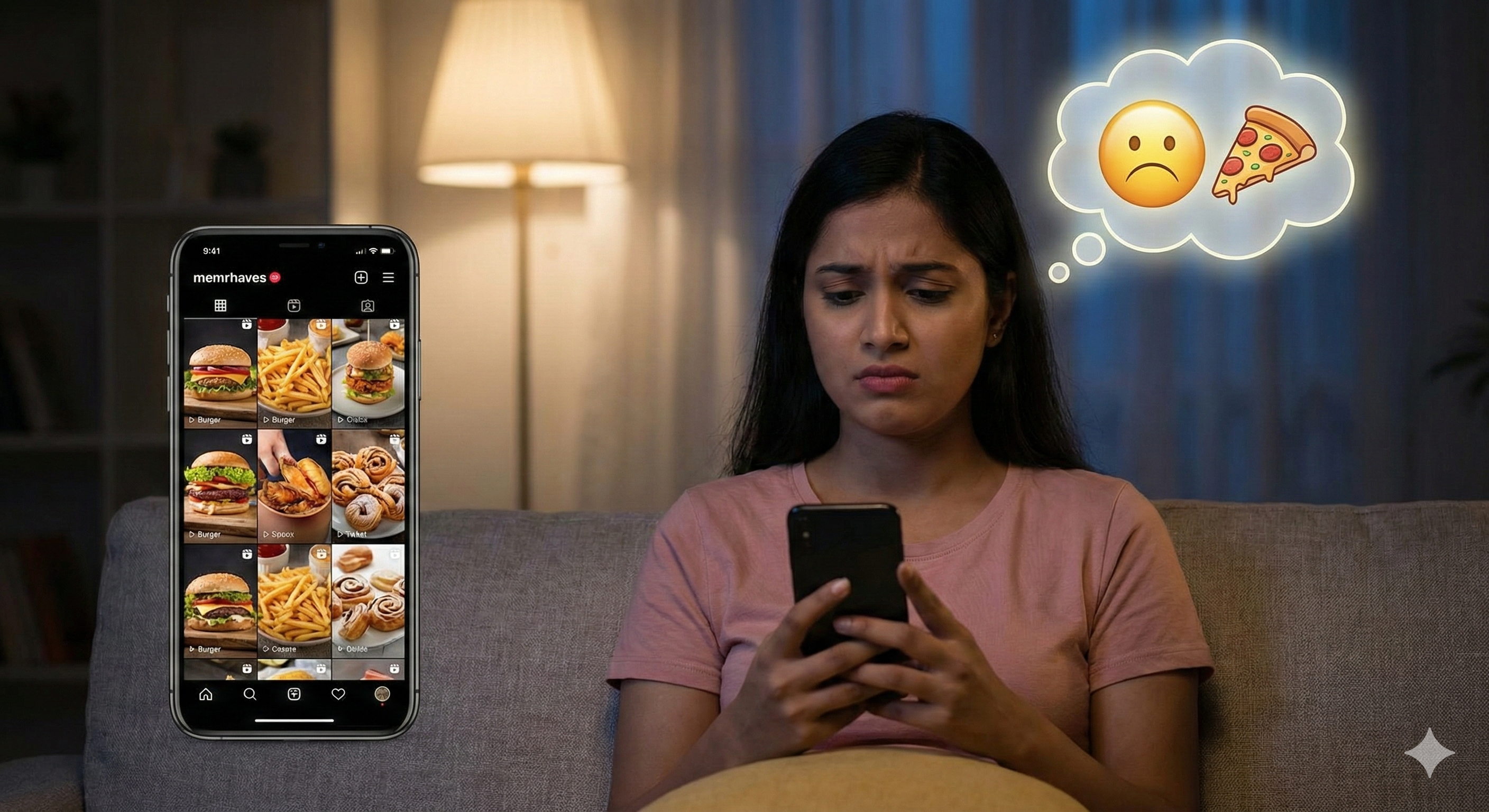
Scrolling through Instagram reels, YouTube shorts or other social media platforms has become a daily habit for many people. Along with entertainment and connection, these platforms are now filled with food-related content, especially visually appealing junk-food reels and advertisements. This growing trend shows how junk food reels can affect your mood and trigger strong food cravings.
While they may seem harmless, some studies suggest that repeated exposure to junk food content can influence cravings, mood, and mental health.
Why Junk Food Images Make You Want to Eat?
Looking at pictures or videos of unhealthy foods can make people feel hungry and crave them, even when they are not physically hungry. Some study shows that when people see appealing food images, they report stronger urges to eat, which can lead to more frequent cravings and eating.
What Is The Impact on Mood and Emotional Health:
Beyond cravings, exposure to junk food content has also been linked to changes in mood. People exposed to such content often report feelings of:
- Stress
- Sadness
- Mental exhaustion
- Increased hunger
These emotional responses may not appear immediately, but over time, they can affect overall mental well-being. Constant stimulation without physical satisfaction can leave people feeling drained and dissatisfied.
What Is The Role of Social Media Advertising:
Food brands increasingly use social media marketing because it allows them to influence users subtly and repeatedly.
Bright visuals, slow-motion shots, sound effects, and influencer endorsements are all designed to make food look irresistible.
Advertising works not just by showing food, but by linking it to pleasure, comfort, success, or social approval.
This can shape food choices subconsciously, making unhealthy options seem more appealing than they actually are.
How Social Media Shapes Our Relationship with Food?
Social media often highlights idealised lifestyles and eating habits, which may not reflect real life. Comparing your food choices to those of influencers or celebrities can distort your perception of what is “normal” or “healthy.”
This constant comparison may:
- Increase dissatisfaction with your own eating habits.
- Encourage emotional or impulsive eating.
- Create confusion around nutrition and health.
Over time, it can weaken intuitive eating and trust in your body’s hunger cues.
Why Repeated Exposure Matters?
The more often you are exposed to junk food content, the stronger its psychological impact can become. Continuous visual stimulation may reinforce cravings, alter eating patterns, and increase reliance on food for emotional comfort.
Repeated exposure may also make it harder to choose healthier foods, even when you are motivated to eat well.
What Are The Tips for Healthier Social Media Consumption?
Experts suggest a few simple steps to protect both mental health and eating habits:
- Limit time spent scrolling, especially when hungry or stressed.
- Follow credible nutrition professionals and balanced food content.
- Unfollow or mute accounts that promote excessive junk food.
- Be mindful of how certain content makes you feel after watching.
- Diversify your feed with movement, wellness, or calming content.
Also Read: Fitterfly-Why Do We Crave Food Late at Night?
Takeaway:
Junk food reels may look entertaining, but repeated exposure can influence cravings, mood, and eating habits more than we realise. Being mindful about what you watch can help protect your mental health and support healthier food choices.
How Does Fitterfly Help You Break the Junk Food Reel Cycle?
Struggling with emotional eating triggered by junk food reels? Fitterfly’s personalised diabetes coaching app empowers you to reclaim control over cravings, mood, and habits.
- Track & Tame Cravings: Log emotional eating triggers (like post-scroll hunger) with Fitterfly’s food diary. Get coach tips to swap junk urges for diabetes-friendly superfoods like moringa or chia seeds.
- Mood-Boosting Tools: Combat stress and sadness from food ads with guided mindfulness sessions and mood trackers. Fitterfly’s certified coaches help rebuild intuitive eating, reducing reliance on comfort foods.
- Curate a Healthier Feed: Access wellness challenges that promote balanced content, helping you unfollow junk reels while building sustainable habits.
Want to know more? Sign up for our program today or give us a missed call at 08068507599, and our team will get back to you promptly.
Awareness is the first step to breaking the cycle of visual cravings and emotional eating.
This blog provides general information for educational and informational purposes only and shouldn't be seen as professional advice.
Frequently Asked Questions
Do junk food reels trigger cravings?
Yes. Watching videos or images of junk food can make your mind crave salty, fatty, or processed foods, even when your body isn't actually hungry.
How do junk food videos affect my mood?
Exposure can increase stress, sadness, and mental tiredness while boosting hunger and emotional eating over time.
Why do food ads feel irresistible?
Food ads feel irresistible because they use bright pictures, slow-motion videos, catchy sounds, and influencers to make junk food look exciting and comforting, which quietly affects your food choices.
What happens with repeated exposure to junk food content?
Watching these videos again and again can make cravings stronger, lead to unhealthy eating, and cause people to eat food for comfort instead of hunger.
How can I stop junk food reels from affecting my diet?
Limit scrolling when hungry or stressed, unfollow junk-promoting accounts, follow credible nutrition creators, and diversify your feed with wellness content.
Do junk food ads affect mental health?
Yes. These ads excite the mind but do not give real satisfaction, which can make people feel low and eat more for comfort.
How does comparing to influencers’ food posts impact me?
It changes what people think of as normal eating, makes them eat for emotional reasons, and makes it harder to notice real hunger.